
Learn
Reuse FAQs
The reuse movement is scaling fast — and so is our collective wisdom. Through conversations with practitioners and the 1,400+ member Reuse Solutions Network, we've identified some questions that keep coming up: What are the real barriers? What actually works?
Reuse Quandaries and Frequently Asked Questions
This is our attempt to pool that knowledge — so we can stop reinventing the wheel and start accelerating solutions together.
This FAQ is a living document. We will be adding to it on an ongoing basis to capture the topmost concerns and questions from across the movement. Like any FAQ, consider this a starting point. We're scratching the surface of complex topics, but if these insights spark new questions or you have resources to add, please reach out. Let's build this together.
Contents
Getting Started: What are local strategies for encouraging or requiring reuse?
Extended Producer Responsibility: What is EPR, and what does it have to do with reuse?
Ware-washing reusables: Dishwashing can be expensive and use lots of water. What are we to do?!

A full transition to a reuse economy involves widespread, quality, shared, interoperable reuse infrastructure and efficiently functioning reuse systems. Like most systems-level change, this requires regulation and large-scale implementation. But, from municipal procurement policies to Skip the Stuff ordinances to single-use fees and reuse incentives, plenty of localized policy and non-policy models can help advance reuse.
Getting Started:
What are local strategies for encouraging or requiring reuse?
-
Municipalities can accelerate reuse by requiring or encouraging reusables in their procurement policies on food and catering, including for entities that get municipal funding, or events held on city property. Local governments can also pass policies that encourage or incentivize beverage refill over pre-bottled beverages.
When crafting local policies, like reuse for onsite dining or Skip the Stuff, make education and enforcement less work for all stakeholders, rather than more — especially for those responsible for enforcing the policy. Consider things like how to ensure county health inspectors embrace their role in enforcing city reuse ordinances, particularly by bringing them into the conversation early. Collaborate with other cities in the county to help with enforcement, especially if they’ve passed similar ordinances.
If imposing single-use cup and container fees seems like a good starting point in your jurisdiction, consider combining them with reuse-enabling policies, such as reuse for onsite dining requirements and modernized food codes that allow BYO. Fees act as a “stick,” but for consumers paying the fee and businesses enforcing it, there is no “carrot” without built-in reuse alternatives.
Incentivize or require retail businesses to offer reusable bags that customers can borrow and return to the store. Short a reusable bag system, opt for policies that put fees on all single-use disposable bags — rather than a ban on plastic bags. Research shows that plastic bag bans may be ineffective at catalyzing reuse and reducing waste, and sometimes even increase plastic waste due to loopholes that allow for thicker “reusable” plastic bags. Single-use bag fees work better for encouraging customers to carry reusable bags.
-
Local community initiative examples (policy and non-policy)
Best Management Practices for Reusable Takeout Containers at Food Establishments in Massachusetts (template example)
-

Extended Producer Responsibility:
What is Extended Producer Responsibility, and what does it have to do with reuse?
Extended Producer Responsibility (EPR) means a producer is responsible, or accountable, for the post-consumer management of the product and/or its packaging that they put on the market. The producer’s obligation generally comes in the form of a fee that is collected by a third-party Producer Responsibility Organization (PRO) and redistributed into waste management, reduction, research and development, and ideally reuse programs — in accordance with the law. With the shift of responsibility away from consumers and municipalities back to producers, EPR packaging laws with strong reuse provisions can compel or incentivize producers to implement reuse in explicit and implicit ways.
-
EPR statutes or laws that require a certain percentage of packaging on the market to be reusable over a certain period of time necessitate that some producers must choose reusable packaging.
EPR statutes or laws that subsidize greener materials through “eco-modulation” financially incentivize producers to shift to reusables because they become cost competitive with or cheaper than single-use.
Different EPR laws include different covered materials — the products producers are required to pay for under the program. Reusables are not always “covered” materials (e.g., in Colorado and California), meaning they exist fee-free outside of the EPR program. This may seem like a financial incentive, but it is actually a missed opportunity to catalyze reuse. Instead, EPR laws should include reusables as a covered material while also ensuring they only pay into the program once upon first market entry. Including reusables in EPR programs makes it easier to advocate for and dedicate funds to reuse.
The funds collected from EPR programs can be earmarked to contribute directly to the buildout of reuse infrastructure and systems. Statewide (or national) EPR laws can therefore enable the regional, interoperable systems that are key to scaling reuse.
EPR is not intended to “fix” recycling and eliminate the need for reuse: instead, it should optimize recycling and open the door for reuse.
Economies of scale prevent producers from passing the costs of conforming to EPR down to consumers. There is no evidence from existing packaging EPR programs around the world that prices of goods have changed due to EPR.
-
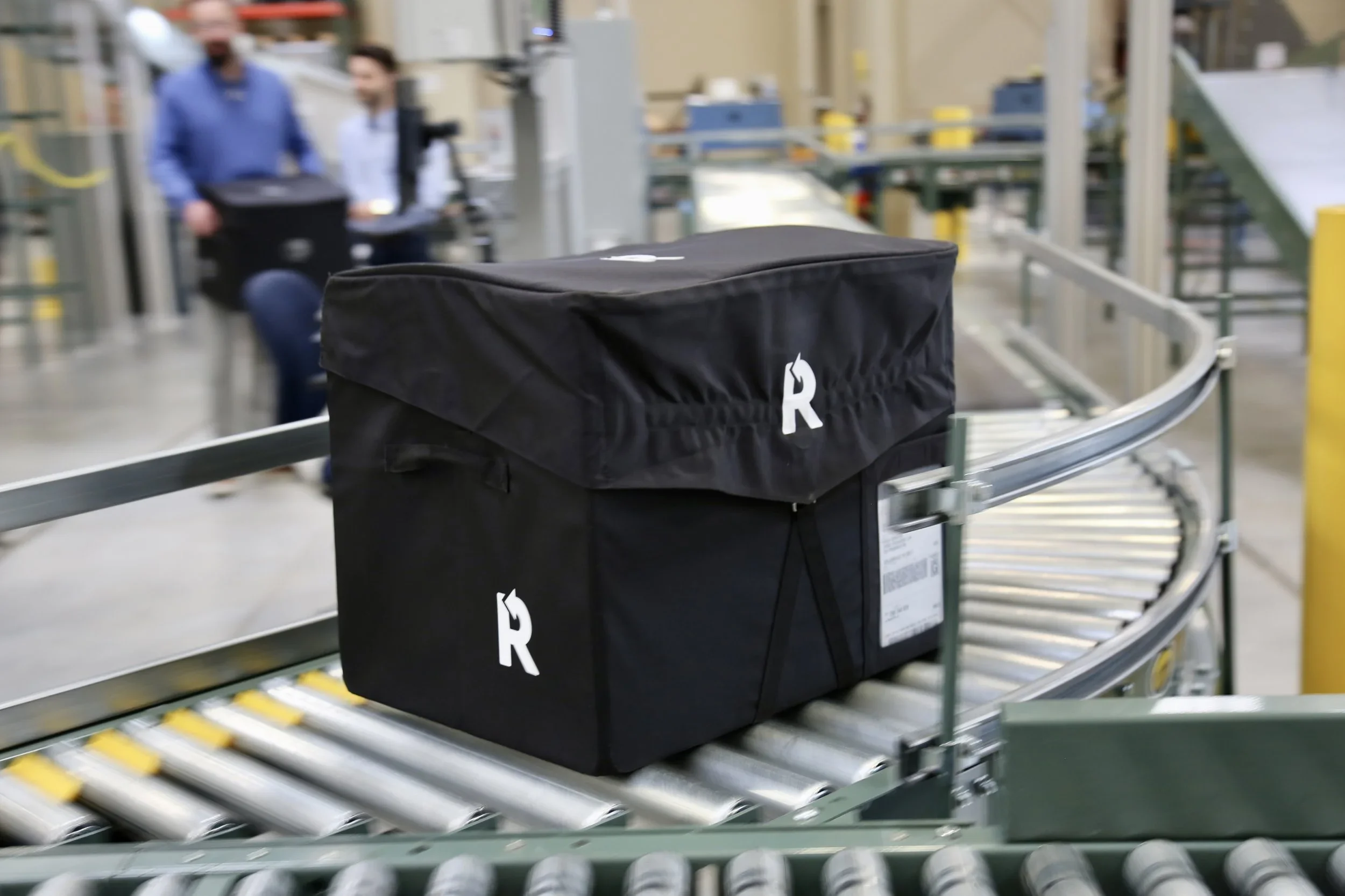
image: Returnity
Ware-washing reusables:
Dishwashing can be expensive and use lots of water. What are we to do?!
For small foodservice establishments and often, schools, dishwashing poses the biggest challenge in transitioning to reusables because it requires an investment in machinery and staff time. Large venues that were built on a single-use system also often do not have wash operations in their facilities. In the near term for large venues, and over time for smaller venues, reuse service providers and wash hubs can remedy these challenges. In terms of water usage, the reality is that over their life cycle, reusable foodware and packaging washed in commercial dishwashers uses far less water than disposable alternatives.
-
Reuse service providers (RSPs) can pick up, wash, and return dishware, often replacing expenditures on waste hauling, staff time, and dishwasher installation or maintenance.
While RSPs require large anchor contracts or up-front financing for the necessary infrastructure buildout, eventually even small restaurants can benefit from the centralized wash hub RSPs bring to an area. This would allow small establishments to overcome challenges like space restrictions and the need to shift operational systems in a high-pace environment.
While reuse infrastructure is still scaling, many in the movement agree that it would be sound policy to require dishwashers in any new dine-in restaurant. Ultimately, both the restaurants and the municipalities would save money from waste hauling and single-use procurement.
With high turnover of businesses, restaurants typically rent dishwashers, which can cost $125/month, including the machine, free servicing, and parts. This may be more economically feasible for small businesses. There are even space-saving machines for small spaces.
A more expensive machine up-front often produces a faster ROI. For high-volume venues, efficient commercial dishwashers that can handle more volume and require less staff time will save money more quickly.
Collaborating with concessionaires and vendors can help scale washing operations. For example, nutrition vendors for schools are starting to promote their sustainability initiatives, as are many other corporate entities. Making the case to them that switching to reuse can enhance their impact reports may catch their interest and motivate them to provide wash facilities — or contracts with RSPs — for schools and other organizations they serve.
-

Stay tuned for more! We will continue to add to this page.